Tape-In vs Clip-In Extensions: Two Very Different Approaches
Tape-in and clip-in extensions are two of the most popular hair extension methods in South Africa, but they could not be more different in how they work, how long they last, and who they are best suited for. At Flirt Hair Extensions in Pretoria, we install tape-in extensions daily and frequently advise clients on whether clip-ins might be a better fit for their needs.
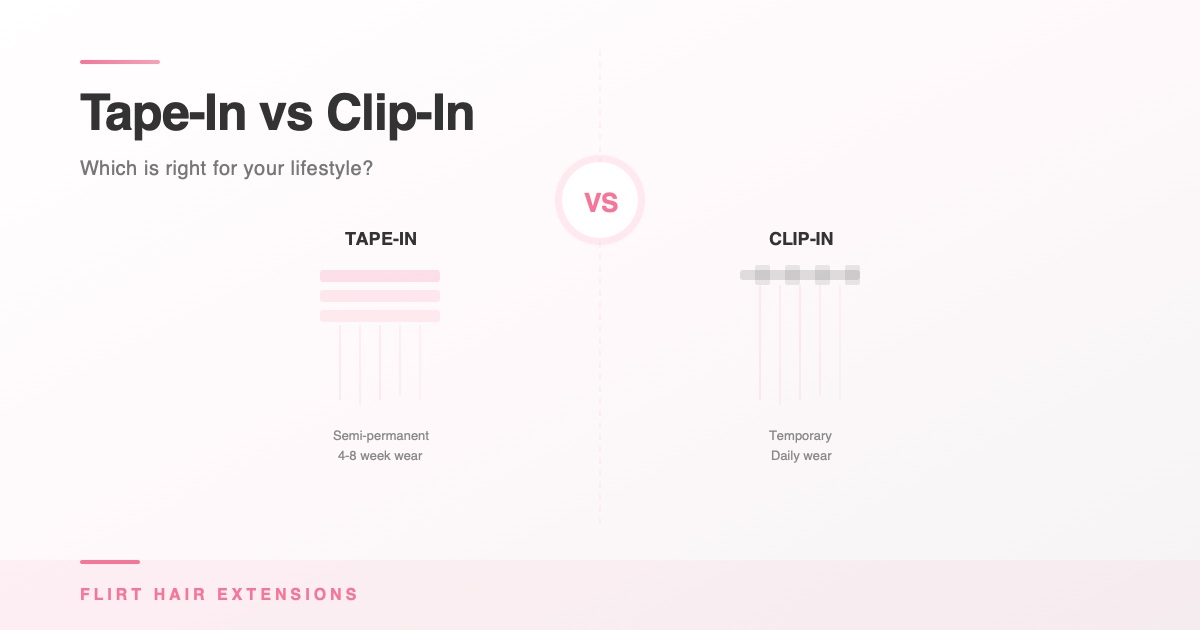
Tape-in extensions are semi-permanent. They are professionally bonded to your natural hair using medical-grade adhesive tape and stay in place for 6-8 weeks before needing maintenance. You wash, sleep, exercise, and swim with them in — they become part of your daily hair.
Clip-in extensions are temporary. You clip them in yourself each morning and remove them each night. They require no professional installation and no long-term commitment. They are essentially a hair accessory.
The question is not which method is "better" — it is which method matches your lifestyle, budget, hair type, and expectations. This guide gives you an honest, side-by-side comparison so you can make the right choice.
Daily Wear and Convenience Compared
Tape-in extensions: Set and forget
Once tape-ins are installed by a professional, you do not think about them. They stay in your hair 24/7. You wake up with beautiful hair, go through your day, exercise, and sleep — all without any extra effort. The only daily requirement is gentle brushing and sleeping with your hair in a loose braid.
This is the single biggest advantage of tape-ins for most women: they eliminate the daily routine of putting extensions in and taking them out. For busy professionals, mothers, and anyone who values their morning time, this convenience is transformative.
Clip-in extensions: Daily commitment required
Clip-ins require 10-20 minutes each morning to section your hair and clip them in, and another 5-10 minutes each evening to remove them. You must remove them before sleeping, swimming, or exercising. If you forget to remove them before bed, you risk tangling, matting, and damage to both the extensions and your natural hair.
For occasional use — a special event, a night out, a photo shoot — clip-ins are perfect. For daily wear, the routine becomes tedious for most women within a few weeks. We regularly see clients at Flirt who switch from clip-ins to tape-in extensions specifically because they are tired of the daily effort.
Verdict: If you want extensions as part of your everyday look, tape-ins win decisively. If you only want extensions for occasional events, clip-ins are more practical.
Cost Comparison: Tape-In vs Clip-In Extensions in South Africa
Clip-in extensions: Lower upfront cost
A good-quality set of clip-in extensions in South Africa costs R1,500 – R4,000 for human hair. Synthetic clip-ins are cheaper (R400 – R1,200) but look less natural and cannot be heat-styled. There is no installation cost because you do it yourself.
Tape-in extensions: Higher upfront, better long-term value
Professional tape-in extensions at Flirt start from R3,665 for a partial set and R5,825 – R12,425 for a full set, including the hair and installation. Maintenance every 6-8 weeks costs R750 – R1,500 for a move-up (reapplying existing tapes higher on the hair).
However, here is the key difference: the hair itself lasts 9-12 months with proper care. A single set of tape-in hair can be reused through 4-6 maintenance cycles. When you calculate cost per day of wear, tape-ins often work out cheaper than high-quality clip-ins that need replacing every 3-6 months.
12-month cost comparison:
Clip-ins (replaced every 4 months): 3 sets × R3,000 = R9,000
Tape-ins (1 set + 5 maintenance visits): R5,825 + (5 × R1,000) = R10,825
The cost difference is modest — and tape-ins deliver a far more natural, convenient, and damage-free experience over that period. For most clients, the small premium is well worth it.
Damage Risk and Hair Health
Clip-in extensions: Risk from repeated clipping
Clip-ins are often marketed as "damage-free" because they are temporary. However, daily clip-in use carries real risks for your natural hair. The metal clips grip tightly onto small sections of hair, creating concentrated tension at the same points every day. Over weeks and months, this repeated stress can cause:
Breakage at the clip sites
Thinning along the sections where clips are placed
Traction headaches from clip pressure
Visible clip lines if not placed carefully
For women with fine or thin hair, daily clip-in use is particularly risky because the clips concentrate force on already delicate strands.
Tape-in extensions: Gentler when professionally installed
Tape-in extensions distribute weight across a wide, flat surface area rather than concentrating it at a single clip point. The medical-grade adhesive creates a secure but gentle bond. When installed by a specialist who understands weight distribution and placement, tape-ins put significantly less stress on your natural hair than daily clip-in use.
The caveat: tape-ins must be installed by a trained professional and maintained on schedule. Overdue tape-ins (left in longer than 8 weeks) can cause matting at the bond area, and improper removal can pull out natural hair. At Flirt, we manage this by scheduling your next maintenance before you leave the salon.
Verdict: For daily wear, tape-ins are gentler on your hair than clip-ins. For occasional use (once or twice a month), clip-ins carry minimal risk.
Which Should You Choose? Our Honest Recommendation
Choose clip-in extensions if:
You only want extensions for special events (weddings, parties, photos)
You enjoy styling variety and want extensions only on certain days
You are not ready to commit to a semi-permanent method
Your budget is under R2,000 and you need a quick solution
You have very short hair (under 10cm) that cannot support bonded extensions
Choose tape-in extensions if:
You want extensions as part of your everyday look
You value convenience and do not want a daily routine
You want the most natural, undetectable result
You have fine hair that needs gentle, distributed weight
You swim, exercise, or lead an active lifestyle
You want maximum lifespan from your hair investment
At Flirt Hair Extensions, we specialise in tape-in, weft, and keratin extensions because our clients want results they can live with every day. If you are unsure which method is right for you, book a free consultation and we will assess your hair, discuss your goals, and recommend the best option — even if that means clip-ins are the right choice for your situation.