Why Washing Hair Extensions Correctly Matters So Much
Washing your hair extensions seems simple — but it is the single aftercare step that causes the most damage when done incorrectly. At Flirt Hair Extensions in Pretoria, we estimate that 80% of the premature extension damage we see during maintenance appointments is caused by incorrect washing techniques.
The reason? Extension hair is fundamentally different from your natural hair in one critical way: it does not receive natural oils from your scalp. Your natural hair is continuously moisturised by sebum produced at the root. Extensions — whether tape-in, weft, or keratin — are disconnected from your scalp's oil supply. This means they dry out faster, are more vulnerable to harsh products, and need gentler handling than your natural hair.
Additionally, the bond area — where extensions attach to your natural hair — is the most sensitive zone. Aggressive washing near the bonds can loosen adhesive (tape-ins), tangle hair around braids (wefts), or weaken keratin fusion points. Every wash must protect this area while still effectively cleaning your scalp and hair.
This guide gives you the exact step-by-step washing process for each extension method, the products you should and should not use, and the common mistakes that shorten extension lifespan.
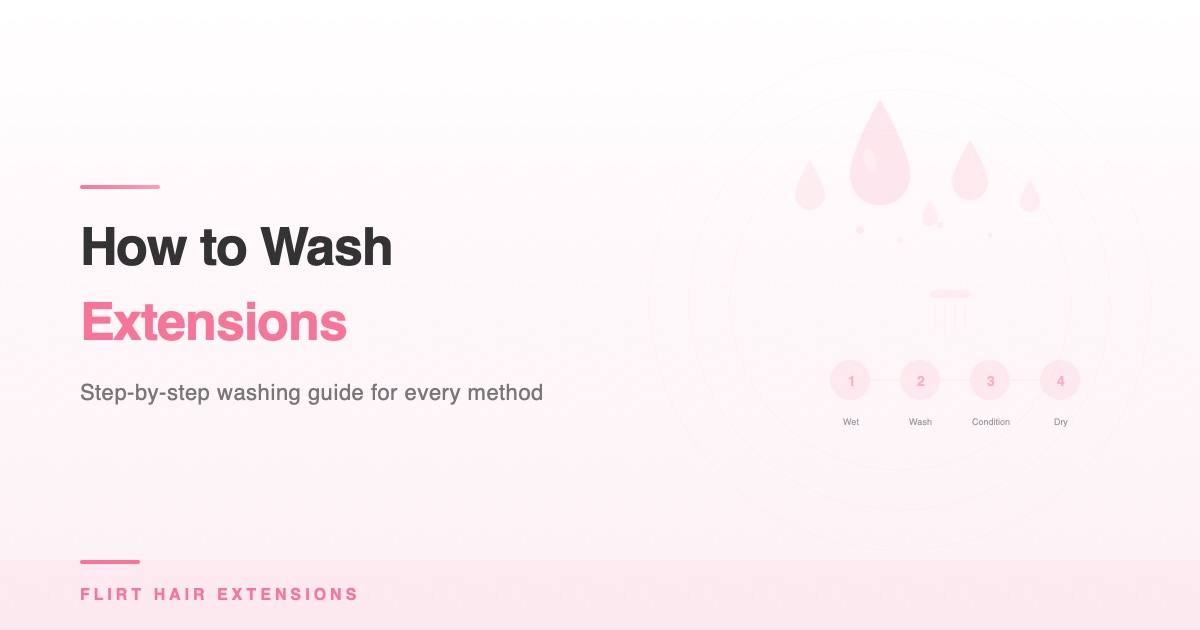
Step-by-Step: How to Wash Tape-In Extensions
Frequency: 2-3 times per week maximum
Step 1: Detangle before wetting.
Using a loop brush or wide-tooth comb, gently brush all tangles from your hair BEFORE getting it wet. Start at the ends and work upward to the roots. Wet, tangled hair is much harder to detangle without damage.
Step 2: Wet hair thoroughly with lukewarm water.
Hot water opens the hair cuticle and strips moisture. Cold water does not clean effectively. Lukewarm is the sweet spot. Let the water run from your scalp downward through the hair — do not flip your head upside down under the shower.
Step 3: Apply sulphate-free shampoo to your scalp only.
Squeeze a coin-sized amount of sulphate-free shampoo into your hands and apply it to your scalp, massaging gently with your fingertips (not nails). Let the shampoo rinse down through the extension hair as you rinse — this provides enough cleansing for the lengths without aggressively washing the bond area.
Step 4: Rinse thoroughly in a downward motion.
Run water from scalp to ends in a single downward direction. Do not scrub, bunch, or pile your hair on top of your head. This is the most common washing mistake and causes severe tangling at the tape bonds.
Step 5: Apply conditioner to mid-lengths and ends ONLY.
Critical: never apply conditioner to the tape bond area. Conditioner contains oils and silicones that break down the adhesive. Apply conditioner from approximately 5cm below the bond area to the ends. Leave for 2-3 minutes, then rinse thoroughly.
Step 6: Gently squeeze excess water.
Wrap your hair in a microfibre towel and gently squeeze — never rub or twist. Microfibre is gentler than cotton and absorbs water faster with less friction.
Step 7: Apply leave-in conditioner and air-dry or blow-dry on low heat.
Apply a lightweight leave-in conditioner or detangling spray to the mid-lengths and ends. If blow-drying, use a low or medium heat setting and direct airflow downward along the hair shaft, away from the bond area.
Step-by-Step: How to Wash Weft and Keratin Extensions
Washing weft (sew-in) extensions:
The process is similar to tape-ins but with extra attention to the cornrow braids beneath the weft.
Follow Steps 1-2 above (detangle and wet with lukewarm water).
Step 3: Focus shampoo on the scalp between braids.
Use the pads of your fingers to massage sulphate-free shampoo into your scalp, working between the cornrow tracks. Avoid vigorous scrubbing on the braids themselves — this can loosen them. Let shampoo run through the weft hair as you rinse.
Step 4: Dry the braid area thoroughly.
This is critical for wefts — trapped moisture beneath the weft can cause mildew or odour. After washing, gently press a microfibre towel against the braid area to absorb water. If blow-drying, direct warm (not hot) air along the braids to ensure they are completely dry before styling.
Washing keratin bond extensions:
Step 3: Shampoo gently around each bond.
Work shampoo through your scalp with your fingertips, carefully navigating around the individual keratin bonds. Do not pull or tug on the bonds during washing.
Step 4: Condition below the bond line.
Apply conditioner starting at least 3cm below each keratin bond. Oil-based conditioners can soften the keratin and cause bonds to slip. Use a lightweight, water-based conditioner.
Step 5: Dry bonds before styling.
After washing, gently towel-dry the bond area and allow bonds to dry before applying any heat styling tools. Wet keratin bonds are slightly softer and more vulnerable to damage from heat tools.
For all extension methods — products to use:
Sulphate-free shampoo (Kevin Murphy, Pureology, Olaplex)
Lightweight conditioner (avoid heavy masks on the bond area)
Leave-in conditioner or detangling spray
Microfibre towel
Products to AVOID:
Sulphate shampoos (SLS, SLES — strips moisture and weakens bonds)
Heavy silicone products (build up on bonds and cause slipping)
Oil-based products near bond areas (loosens adhesive and keratin)
2-in-1 shampoo/conditioner combos (too heavy for extension hair)
Dry shampoo sprayed directly on bonds (powder buildup)
How Often Should You Wash Hair Extensions?
The golden rule: 2-3 times per week, maximum.
Over-washing is one of the most common mistakes extension wearers make. Every wash strips moisture from the extension hair, and unlike your natural hair, extensions cannot replenish that moisture naturally.
Why less washing is better:
Each wash cycle removes natural and applied oils that keep extensions soft and smooth
Sulphate-free shampoos are gentler but still remove some moisture with each use
The mechanical action of washing (even gently) creates friction that wears the hair cuticle over time
Frequent wetting and drying of the bond area can weaken adhesive (tape-ins) or keratin
Between washes:
Use dry shampoo on your roots (not on bonds) to absorb oil and extend the time between washes
A silk or satin pillowcase keeps hair fresher for longer by reducing friction-induced frizz
If you exercise and sweat, you can rinse your scalp with water only (no shampoo) and let the extensions air-dry
After swimming:
Rinse your hair immediately after pool or ocean exposure
If you swam in a chlorinated pool, wash with a clarifying shampoo (one-time use, not for regular washing)
Deep condition the extension hair after every swim session
See our complete guide to swimming with extensions for detailed advice
When to wash MORE frequently:
If you use heavy styling products daily (product buildup on bonds needs cleaning)
If you exercise intensely and sweat heavily (salt from sweat can corrode adhesive)
If you live in a dusty environment or spend significant time outdoors
Drying Your Extensions: The Right Way
How you dry your extensions is just as important as how you wash them. Incorrect drying causes frizz, tangling, and bond damage.
Air drying (gentlest option):
After squeezing excess water with a microfibre towel, apply leave-in conditioner and allow your hair to dry naturally. This is the gentlest approach and preserves the most moisture. The downside: it takes 2-4 hours for long, thick extensions to dry completely. Never go to sleep with wet extensions — wet hair tangles severely during sleep and wet bonds can loosen.
Blow drying (fastest option):
Use a low-to-medium heat setting. Hold the dryer at least 15cm from your hair. Direct airflow DOWNWARD along the hair shaft — never upward, as this roughs up the cuticle and creates frizz. Keep the dryer moving — do not concentrate heat on one spot. Avoid directing heat at the bond area for tape-ins (heat softens adhesive).
Towel drying (with care):
Only use a microfibre towel — never a regular cotton towel. Cotton creates friction that roughens the hair cuticle. Gently squeeze sections of hair in the towel. Never rub vigorously or twist the towel around your hair.
T-shirt drying (alternative to towel):
Some extension wearers prefer drying with a clean cotton t-shirt, which is smoother than a standard towel. Wrap your hair in the t-shirt and press gently. This works well for curly or wavy extension styles.
Following these washing and drying techniques consistently will significantly extend the lifespan of your extensions and keep them looking salon-fresh between maintenance appointments at Flirt Hair Extensions.